How to Check Car Battery Condition: A Complete Guide for Every Car Owner
Your car battery is the heart of your vehicle’s electrical system. From starting the engine to powering lights, infotainment, and safety systems, everything depends on a healthy battery. Unfortunately, most car owners only think about the battery after the car refuses to start.
The good news? You can easily check your car battery condition at home and avoid unexpected breakdowns. This guide explains how to check car battery health, warning signs of a weak battery, and when to replace it.
Why Checking Your Car Battery Condition Is Important
A car battery doesn’t fail suddenly in most cases—it shows warning signs. Regular battery checks help you:
-
Avoid sudden breakdowns
-
Prevent being stranded on the road
-
Improve vehicle performance
-
Extend battery life
-
Save money on emergency replacements
On average, a car battery lasts 3–5 years, depending on usage, climate, and maintenance.
Common Signs of a Weak or Failing Car Battery
Before checking with tools, look for these warning signs:
-
Engine cranks slowly or struggles to start
-
Dashboard lights appear dim
-
Electrical features work inconsistently
-
Clicking sound when turning the key
-
Battery warning light on the dashboard
-
Corrosion around battery terminals
If you notice any of these, it’s time to check your battery condition.
How to Check Car Battery Condition (Step-by-Step)
1. Visual Inspection (Quick & Easy)
Start with a simple visual check.
What to look for:
-
Corrosion (white or green powder) on terminals
-
Loose or damaged cables
-
Swollen or cracked battery casing
-
Leaking fluid
⚠️ If the battery case is swollen or leaking, replace it immediately.
2. Check Battery Age
Most batteries have a manufacturing date printed on them.
-
Example: 08/22 (August 2022)
-
If your battery is over 3 years old, monitor it closely
-
Over 5 years old → replacement recommended
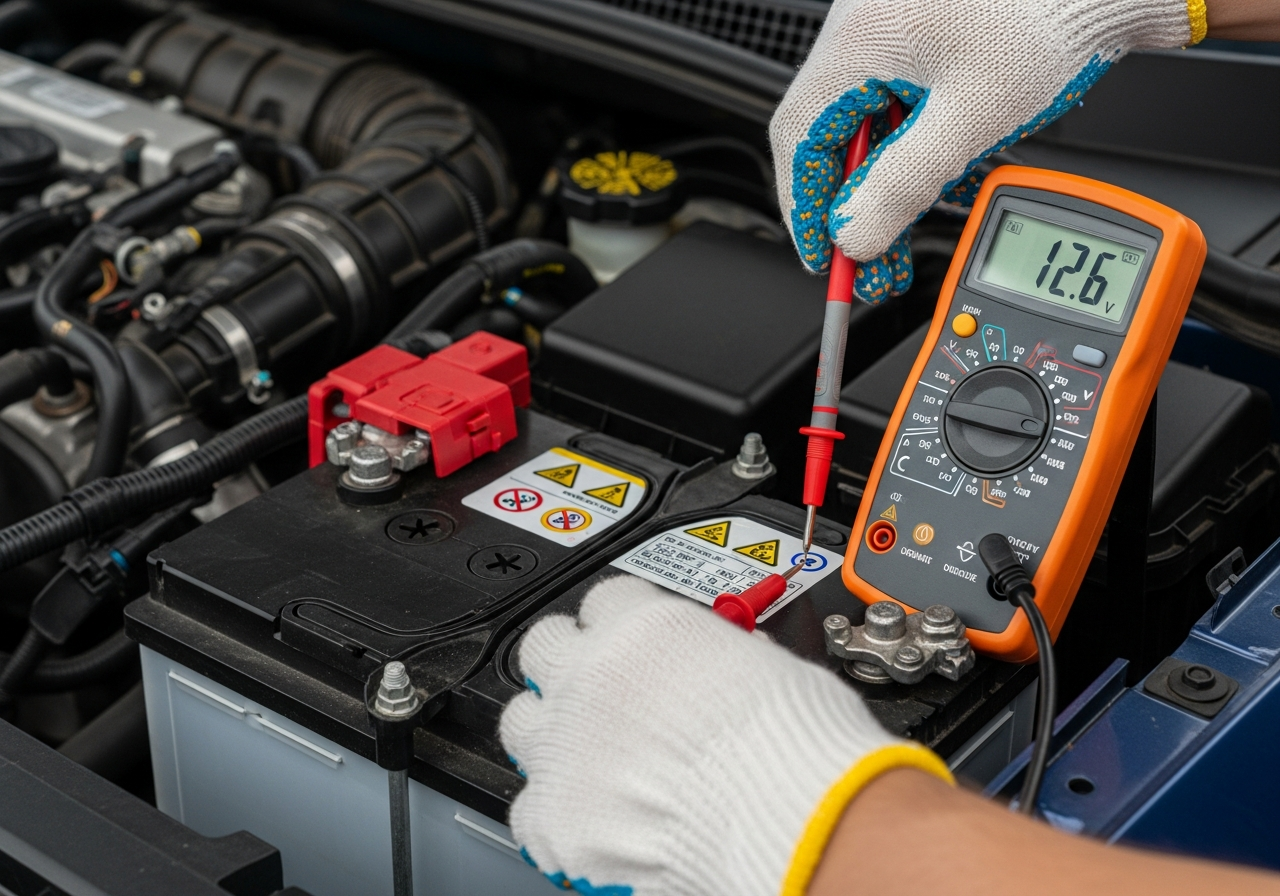
3. Check Battery Voltage Using a Multimeter
This is one of the most accurate methods.
Steps:
-
Turn off the engine
-
Set multimeter to DC voltage
-
Connect red probe to positive (+)
-
Connect black probe to negative (–)
Voltage readings explained:
| Voltage Reading | Battery Condition |
|---|---|
| 12.6V – 12.8V | Healthy |
| 12.4V – 12.5V | Moderate |
| 12.2V – 12.3V | Weak |
| Below 12.0V | Needs replacement |
? Check again while starting the car—if voltage drops below 10V, the battery is failing.
4. Check Battery Using Car Dashboard
Most modern cars have a battery warning light.
-
Light ON while driving → charging system issue
-
Light ON before starting → possible battery weakness
⚠️ Do not ignore dashboard warnings.
5. Headlight Test (Basic Home Test)
Turn on headlights without starting the engine.
-
Bright and steady → battery is okay
-
Dim or flickering → weak battery
Now start the engine:
-
If lights dim briefly and recover → normal
-
If lights stay dim → battery problem
6. Get Battery Load Test at a Service Center
A professional load test checks how the battery performs under stress.
-
Takes only 5–10 minutes
-
Available at car service centers or battery shops
-
Gives accurate remaining battery life
Recommended if:
-
Battery is over 3 years old
-
You face frequent starting issues
How Often Should You Check Your Car Battery?
-
Every 6 months (normal usage)
-
Before long trips
-
Before summer or winter seasons
-
If car is unused for long periods
Tips to Maintain Car Battery Health
-
Drive regularly (short trips drain batteries)
-
Avoid leaving lights or accessories ON
-
Keep terminals clean and corrosion-free
-
Turn off electronics before switching off engine
-
Park in shaded areas during extreme heat
When Should You Replace Your Car Battery?
Replace your battery if:
-
It’s older than 4–5 years
-
Voltage remains below 12V
-
Car struggles to start repeatedly
-
Battery fails a load test
-
Physical damage is visible
Delaying replacement can damage the alternator and starter motor.
Final Thoughts
Checking your car battery condition is simple, quick, and extremely important. A few minutes of inspection can save you from costly repairs and roadside breakdowns. Whether you use a multimeter, dashboard indicators, or professional testing, regular battery checks ensure safe and smooth driving.
If your battery shows signs of weakness, don’t wait for complete failure—replace it in time and drive stress-free.

GaadiAdvisor
Admin
Summer Car Care Checklist: Simple Tips to Protect Your Car & Your Peace of Mind
Tips 5 min read
Read →
Essential Things to Check in a Car Before a Long Drive
Tips 5 min read
Read →
Car Service Appointment Tips
Tips 5 min read
Read →
Why Should You Consult a Professional Before Going for Car Repair and Servicing?
Guide 10 min read
Read →
Essential Car Health Check Before Summer Season in Odisha
Tips 5 min read
Read →


